
Are Traditional Science Labs Enough
for Today’s Learning Needs?
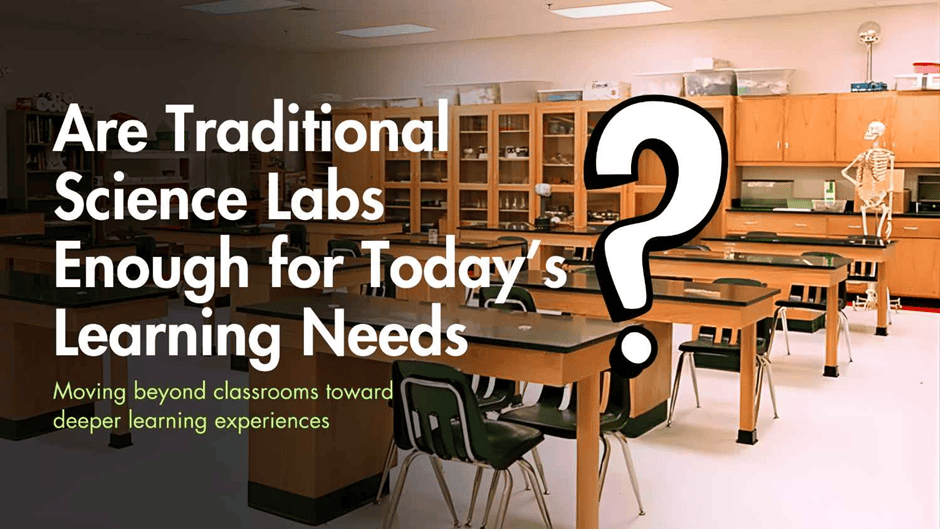


Science labs have long been an essential part of school education. For decades, they have helped students observe experiments, verify theories, and gain exposure to practical science concepts. In many schools, science labs continue to play a valuable role in academic learning.
However, as education evolves and learning expectations change, school leaders are increasingly asking an important question: are traditional science labs in schools enough to meet today’s learning needs? With greater emphasis on concept clarity, application, and skill development, it has become necessary to re-examine how effectively conventional lab models support modern education.
What Traditional Science Labs Do Well
Traditional science labs have clear strengths and should not be underestimated. They provide students with structured environments to observe experiments and understand scientific principles in action.
Some key strengths include:
● Alignment with curriculum requirements
● Demonstration of scientific concepts through experiments
● Familiar teaching methods for educators
● Exposure to basic STEM activities for schools
For many schools, these labs form the foundation of practical science education and remain relevant for demonstrating core principles.
The Gaps in Traditional Science Labs Today
While traditional labs serve an important purpose, they often have limitations when viewed through the lens of modern learning needs.
Common challenges include:
● Limited frequency of lab usage during the academic year
● Focus on verification rather than exploration
● Minimal integration with mathematics and real-world problem solving
● Difficulty addressing diverse learning styles
As learning expectations expand beyond observation alone, schools are recognising the need for lab environments that also support reasoning, collaboration, and application. This is where the idea of a composite skill lab for schools begins to emerge in spaces that go beyond experiments to support broader learning outcomes.
How Learning Needs Have Evolved in Schools
Today’s students are expected not only to understand concepts but also to apply them. Parents, educators, and education boards increasingly value learning approaches that build understanding, confidence, and transferable skills.
Modern learning priorities include:
● Application-based understanding
● Integration of science and mathematics
● Development of logical and problem solving skills
● Continuous engagement rather than isolated lab sessions
These expectations align with the broader shift toward stem education solutions for schools, where learning environments support deeper understanding rather than isolated experimentation.
From Traditional Science Labs to Modern STEM Labs
Modern STEM labs are not replacements for traditional science labs, they are evolutions of them. While traditional labs focus on subject-specific experiments, STEM labs broaden the scope by connecting multiple concepts through hands-on activities.
A well-designed STEM lab setup for schools enables:
● Application of science concepts alongside math and reasoning
● Activity based exploration rather than one time demonstrations
● Continuous reinforcement of classroom learning
● Greater student engagement across grades
This integrated approach allows schools to address learning gaps that traditional labs alone may not fully cover.
The Role of Integrated Skill Development
One of the key advantages of modern lab environments is their ability to support skill development alongside academics.
When students engage with concepts hands-on, they naturally develop important abilities such as:
● Logical thinking
● Problem solving
● Collaboration
● Communication
A composite skill lab for schools helps nurture these skills without adding separate sessions or extra academic pressure. Instead, skill development becomes part of everyday learning.
What Schools Should Consider When Upgrading Labs
For school leaders considering upgrades or new lab initiatives, thoughtful planning is essential. A successful school innovation lab setup focuses on learning outcomes rather than equipment alone.
Key considerations include:
● Alignment with curriculum and grade levels
● Ease of use for teachers
● Integration with regular classroom teaching
● Scalability over time
● Long-term academic relevance
Careful planning ensures that labs remain active learning spaces rather than underutilised facilities.
Are Traditional Science Labs Enough on Their Own?
Traditional science labs continue to play a valuable role in education. However, on their own, they may no longer be sufficient to address the full spectrum of today’s learning needs.
As schools focus more on application, integration, and skill development, they benefit from adopting broader stem education solutions for schools that complement existing lab infrastructure. The goal is not to replace traditional labs, but to evolve them in line with modern educational expectations.
A Thoughtful Note for School Leaders
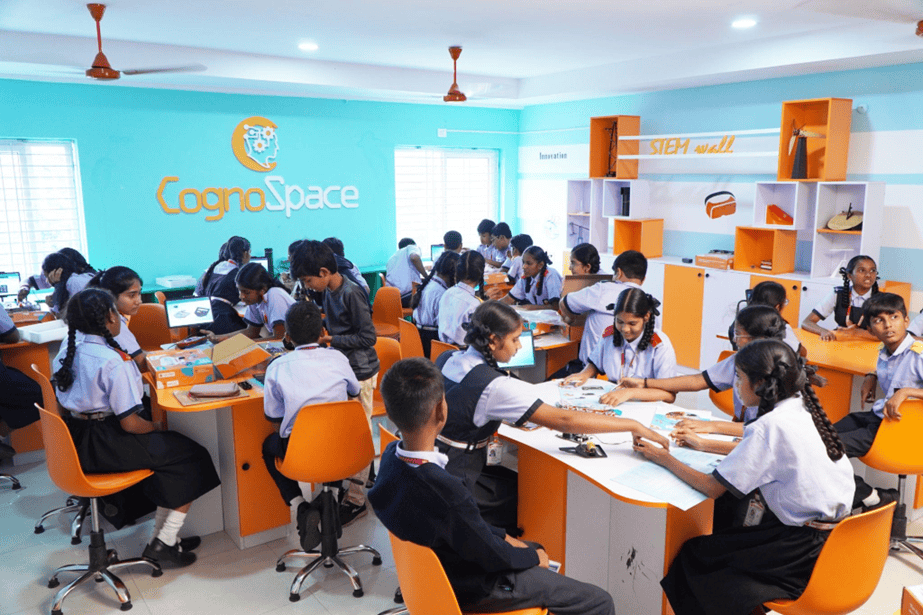
As schools evaluate lab models and explore modern learning environments, many choose to work with experienced partners who understand curriculum alignment and classroom realities. In this context, organisations such as CognoSpace support schools in designing STEM and skill-based lab ecosystems that strengthen concept clarity and long term learning outcomes without disrupting existing academic structures.