
Why Learning Labs Are Becoming
Essential in Modern Schools
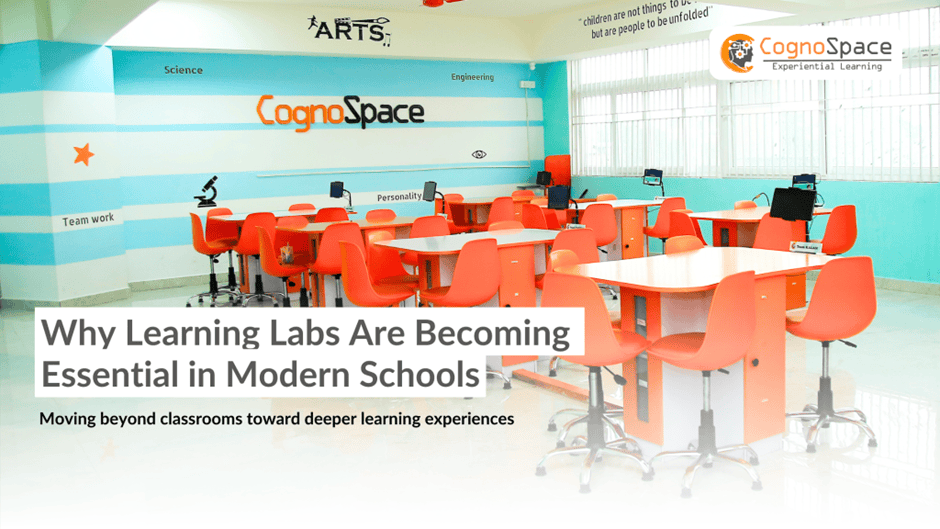


Schools today operate in a very different environment than they did a decade ago. Parents expect more than exam scores, students need deeper understanding, and educators are under increasing pressure to make learning meaningful, engaging, and applicable beyond textbooks.
In this changing landscape, labs in schools are no longer viewed as optional add-ons. They are increasingly becoming a core part of modern education systems. Learning labs give students opportunities to apply concepts, experiment, collaborate, and engage actively with what they learn, bridging the gap between theory and real understanding.
As education systems evolve, schools are also being evaluated on how students learn, not just what they learn. Learning labs respond to this shift by creating structured environments where application, exploration, and concept clarity take centre stage. This reflects a growing focus on understanding and skill development in modern schooling.
What Are Learning Labs in the School Context?
Learning labs are structured learning spaces designed to support concept application rather than rote instruction. Unlike traditional laboratories that focus on isolated experiments or equipment, learning labs are built around how students learn best.
In schools, learning labs typically:
● Support science and math learning through activities
● Encourage observation, experimentation, and discussion
● Help students apply textbook concepts practically
● Enable collaborative and inquiry-based learning
A well planned school innovation lab setup focuses on learning outcomes rather than hardware alone. These labs complement classrooms by reinforcing lessons through activity and exploration, rather than replacing formal teaching methods.
Why Traditional Classroom Models Are No Longer Enough
Classroom teaching remains essential, but it has limitations when used as the sole mode of learning. Many students can memorise formulas or definitions, yet struggle to explain concepts in their own words or apply them in unfamiliar situations.
Common challenges of traditional learning models include:
● Passive, one way instruction
● Limited opportunity for experimentation
● Difficulty addressing varied learning styles
● A gap between theory and real world application
This has led schools to reflect on experiential learning vs traditional learning approaches. While traditional classrooms focus on content delivery, learning labs focus on understanding, allowing students to experience concepts rather than only hearing about them.
The Shift Toward Application-Based Learning
Modern education is steadily moving toward application based learning, where students actively engage with concepts instead of passively absorbing information. Learning labs play a critical role in enabling this shift.
When students apply what they learn:
● Concepts become clearer and easier to retain
● Learning feels relevant and engaging
● Confidence in understanding increases
This approach aligns closely with evolving stem education solutions for schools, where the emphasis is on reasoning, logic, and problem solving rather than memorisation. Learning labs provide the environment needed to make this transition effective and sustainable.
How Learning Labs Support Science and Math Outcomes
Science and mathematics involve abstract ideas that can be difficult to grasp through explanation alone. Learning labs help translate these ideas into tangible experiences.
Through learning labs, schools can:
● Demonstrate scientific principles visually
● Show how mathematics applies to real world situations
● Reinforce concepts already taught in class
● Improve retention without adding academic pressure
A thoughtfully designed STEM lab setup for schools ensures that learning labs remain aligned with the curriculum. Instead of introducing extra content, they strengthen understanding of existing topics, making them easier for students to grasp and apply.
Learning Labs as Integrated Skill Spaces
Beyond academic understanding, learning labs also help students develop essential skills. Modern learning labs often function as integrated spaces that support both subject learning and skill development.
This is where the concept of a composite skill lab for schools becomes relevant. Such labs help students build:
● Logical and analytical thinking
● Problem solving abilities
● Collaboration and communication skills
● Confidence in exploring and experimenting
These skills develop naturally when students work with concepts hands-on, discuss outcomes, and learn from trial and error without the need for separate skill focused sessions.
Why Learning Labs Matter for School Leadership
For school leaders, learning labs are not just academic spaces, they are strategic investments in learning quality. Well designed learning labs help address diverse learning needs while improving consistency in teaching outcomes.
From a leadership perspective, learning labs:
● Support better utilisation of classroom time
● Enhance student engagement across grades
● Improve alignment between curriculum and delivery
● Strengthen the school’s long term academic vision
This makes learning labs a practical, long term solution rather than a short term educational trend.
What Makes a Learning Lab Effective in Schools?
Not all learning labs deliver the same impact. Effectiveness depends largely on how thoughtfully the lab is designed and implemented.
Key elements of an effective learning lab include:
● Clear learning objectives aligned with academics
● Grade-wise progression across years
● Curriculum alignment, not parallel content
● Teacher usability and classroom integration
● Long-term sustainability over one time setup
A successful school innovation lab setup focuses on daily learning value rather than visual appeal alone.
How Schools Can Plan Learning Labs Thoughtfully
For many school leaders, planning learning labs can seem complex. However, a structured approach simplifies the process and improves outcomes.
Schools can begin by:
● Identifying learning gaps and objectives
● Starting with core subjects like science and math
● Designing labs that align with everyday teaching
● Avoiding trend-driven or technology-heavy decisions
A well-planned STEM lab setup for schools grows organically with the institution’s academic vision. Instead of focusing on equipment alone, schools benefit more by prioritising learning outcomes and teacher readiness.
Learning Labs as a Core Part of Modern Education
Learning labs are no longer supplementary spaces, they are becoming essential to how schools deliver meaningful education. By supporting application based learning, learning labs help students move beyond memorisation toward real understanding.
Schools that adopt learning labs in schools thoughtfully are better equipped to:
● Improve concept clarity
● Increase student engagement
● Build strong academic foundations
● Prepare students for future learning challenges
As education continues to evolve, learning labs play a vital role in ensuring schools remain relevant, effective, and learner-focused.
Frequently Asked Questions
Are learning labs suitable for all grade levels?
Yes. Learning labs can be designed grade wise, ensuring activities are age-appropriate and aligned with curriculum goals from primary to middle school.
How are learning labs different from traditional labs?
Traditional labs focus on isolated experiments, while learning labs emphasise concept application, discussion, and continuous reinforcement of classroom learning.
Do learning labs add extra academic pressure?
No. When aligned with classroom teaching, learning labs reinforce existing concepts rather than introducing additional workload.
A Thoughtful Note for School Leaders
As schools explore learning labs in schools and evaluate stem education solutions for schools, many choose to work with experienced partners who understand curriculum alignment and classroom realities. In this context, organisations such as CognoSpace support schools in designing learning labs and composite skill spaces that focus on concept clarity, application-based learning, and long term educational outcomes going beyond trend-led implementations.